
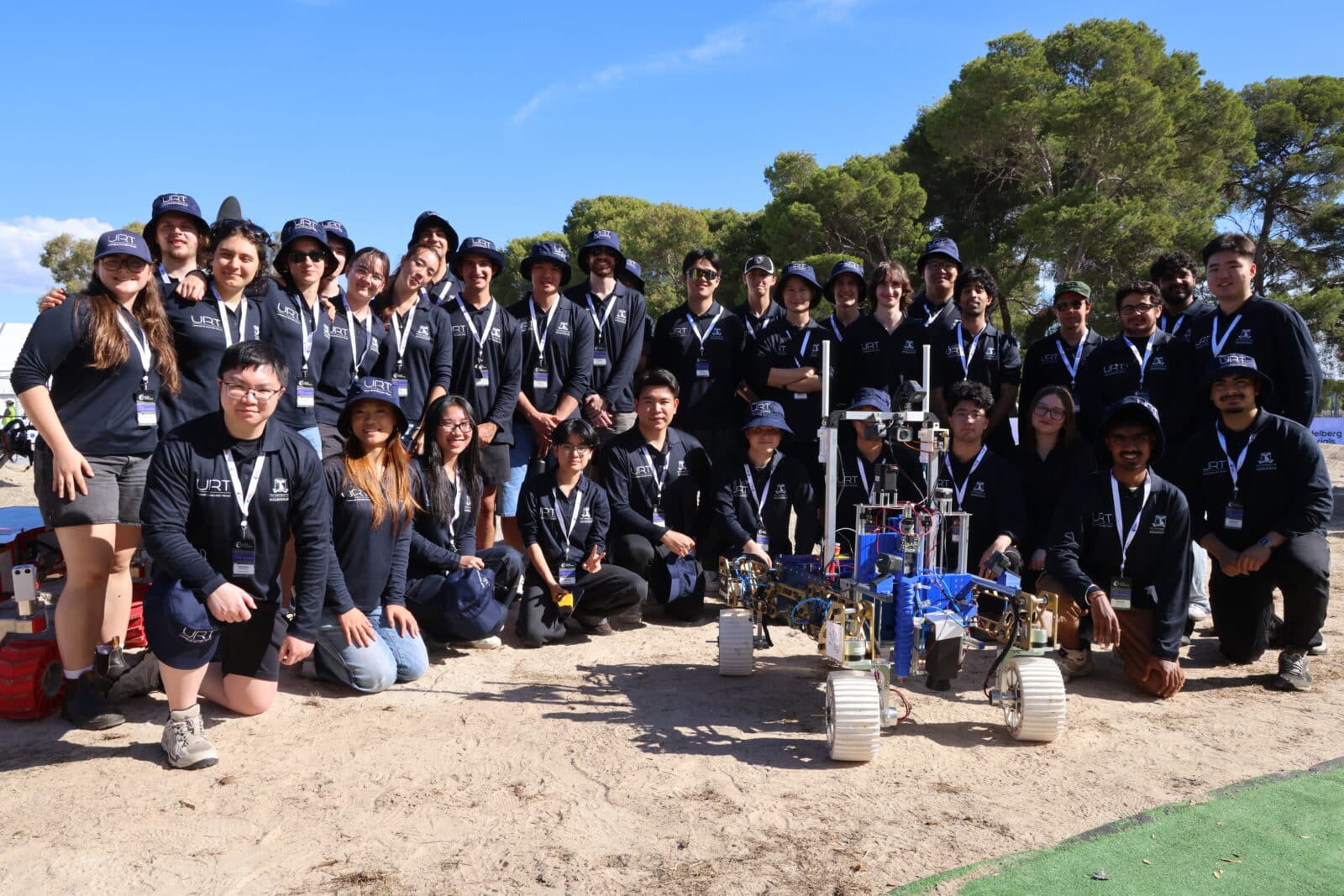
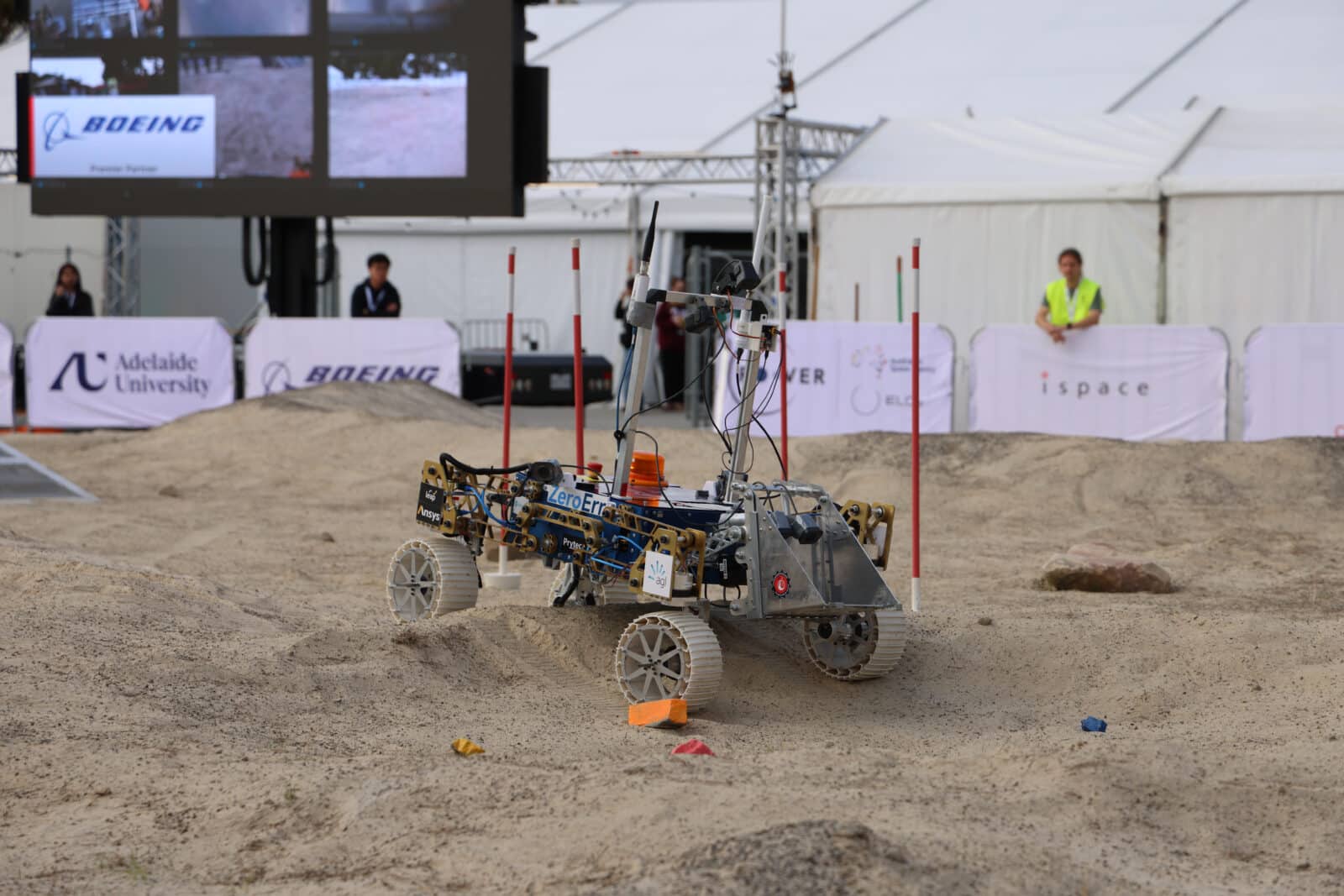
Unimelb Rover Team (URT) is a student-run multi-disciplinary team from the University of Melbourne who design and build a lunar exploration rover, to compete in the annual Australian Rover Challenge (ARCh).
At the competition, URT has to remotely operate their rover to complete a series of tasks designed to simulate a real lunar exploration mission, such as navigation, mapping, lunar material excavation and analysis, and interaction with a processing plant and surrounding terrain using their robotic arm.
For the 2026-2027 design cycle, URT are aiming to develop and integrate an EtherCAT network into the rover’s communication architecture to improve the reliability and robustness of the rover’s motion control, and improve the performance of the rover’s drivetrain and robotic arm. To achieve this goal, URT are developing custom EtherCAT subdevices, using the LAN9252 EtherCAT controller, and the Simple Open-source EtherCAT Slave (SOES) stack software running on an STM32 microcontroller.
URT is developing the EtherCAT software using RT-Labs EtherCAT Slave Editor to generate both EEPROM binary files and the application layer code using the CANopen protocol. These devices will then be verified and tested using the EtherCAT Explorer software, and finally integrated into the existing EtherCAT network to control their drive motors and robotic arm end-effector.
URT brings together a talented and innovative team of students with a shared passion for engineering and lunar exploration. Their creativity, technical expertise, and dedication enable them to tackle complex challenges and continuously push the boundaries of their rover design. We are proud to support URT in this project and look forward to seeing the team bring their new EtherCAT architecture to life.
We wish them the very best of luck during the 2026-2027 design cycle and can’t wait to follow their progress and future achievements.
The 2027 Australian Rover Challenge will be held from March 18-21, 2027.